


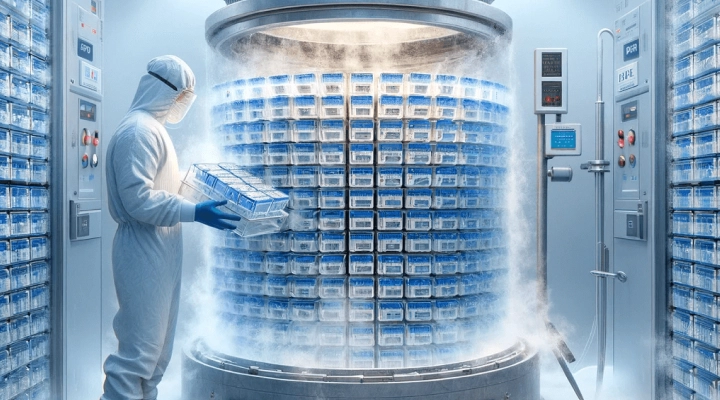
COVID-19. Conclusions for biobanks

The world is increasingly talking about new pandemics and the readiness of the economy and medicine for future challenges. COVID-19 revealed many challenges in the organization of care, but also launched advanced technologies and treatment protocols. The closure of borders and difficulties in the logistics of necessary vaccines and drugs forced doctors to engage in innovative developments and experiment with new methods of providing care within their countries. Cell therapy has become one of the promising fields of research.
The world situation
In just two years, from January 2020 to December 2021, 195 clinical trials of cell therapy for COVID-19 were registered in 30 countries. The USA, China, Iran and Spain became the leaders in terms of the number of studies. Even conservative Israel used mesenchymal stem cells from the fat of young donors to treat covid. Of course, only those countries and medical institutions that had access to biomaterial were able to conduct clinical research and implement cell therapy.
After the pandemic, the medical community made important conclusions from research on the use of cellular drugs in the treatment of coronavirus:
- The acute form of COVID-19 must be treated urgently, at the location of the patient.
- Allogeneic (donor) cells were used in 76% of studies, autologous (own) cells were used in 11% of cases; in 13% - unknown.
- Almost all cells were obtained from local biobanks of the countries where the treatment took place.
- 72% used mesenchymal stem cells (MSCs) obtained from umbilical cord, placenta, fat or bone marrow. Both cells that had been kept frozen in the biobank for several years and cells obtained only by cultivation were used.
Patient feedback
This is how an anesthesiologist who became seriously ill with a coronavirus infection describes the effect of umbilical cord blood:
In 2021, he suffered a severe course of Covid, with more than 60% lung damage, against the background of type 2 diabetes, hypertension and arrhythmia. There was hypoxia + artificial lung ventilation, many hormonal drugs, anti-inflammatory drugs. Recovery was very long and physically difficult, so he resorted to stem cell therapy. The main desire was to return to a normal life. After the introduction of hematopoietic cells, somewhere closer to the second week, I began to feel an influx of strength, the painful condition (drowsiness, swelling) began to disappear, the power of endurance increased (it was possible to walk more or do something around the house).
Oleksandr N., 54 years old
Resources
1. https://parentsguidecordblood.org/en/news/covid-19-lessons-learned-biobanks
2. Pedro Silva Couto, Al-Arawe N, Filgueiras IS, Fonseca DLM, Hinterseher I, Catar RA, Chinnadurai R, Bersenev A, Cabral-Marques O, Guido Moll & Frances Verter (June 2023) Systematic Review and Meta-Analysis of Cell Therapy for COVID-19: Global Clinical Trial Landscape, Published Safety / Efficacy Outcomes, Cell Product Manufacturing and Clinical Delivery. Frontiers Immunology 14:1200180.
3. Pedro Silva Couto, Al-Arawe N, Filgueiras IS, Fonseca DLM, Hinterseher I, Catar RA, Chinnadurai R, Bersenev A, Cabral-Marques O, Guido Moll & Frances Verter (June 2023) Systematic Review and Meta-Analysis of Cell Therapy for COVID-19: Global Clinical Trial Landscape, Published Safety / Efficacy Outcomes, Cell Product Manufacturing and Clinical Delivery. Frontiers Immunology 14:1200180.
Do you want to be informed about all the events?
Sign up to the newsletter of current events